
Another Country Diary #66
With hares and barley straw


26/7/26
I’m awake early to let out and feed the hens. It has rained during the night. The air is damp and cool. The wind has picked up.
It feels too early for breakfast, so after I’ve fed the cats I head off for a walk before the day warms up. It feels like stolen time. A grey heron beats its wings as it flies up from one of the field ponds that dot the edge of the village. It banks over our house as I’m leaving. I decide to walk through the lanes to the top fields. A cock crows from the nearby livery yard. They must have a flock of hens. When we had a cockerel we could hear him from a good half mile away. I don’t see any cars as I leave the main road and for the lanes that lead across what was once the village common. A kestrel is busy in the breeze over a field seeded with meadow grass. A flock of goldfinches is rushing and swirling, shoal-like, around one of the tall hedge oaks.
Being able to take an early morning walk like this feels like a great liberty. I am on annual leave and have no need to rush in the morning. Ceci and the girls left for Buenos Aires yesterday to visit family. I stayed behind, in part, to have time to write, and in part, to look after the cats and the hens and the garden. The warm bustle of family life is suddenly absent, the house and my time filled with a stillness and a silence that feels unfamiliar and strange. I have to find ways of filling it. This walk is one of the ways. They are still up there, somewhere over Brazil by now, and it is better to fill the distance with nature.
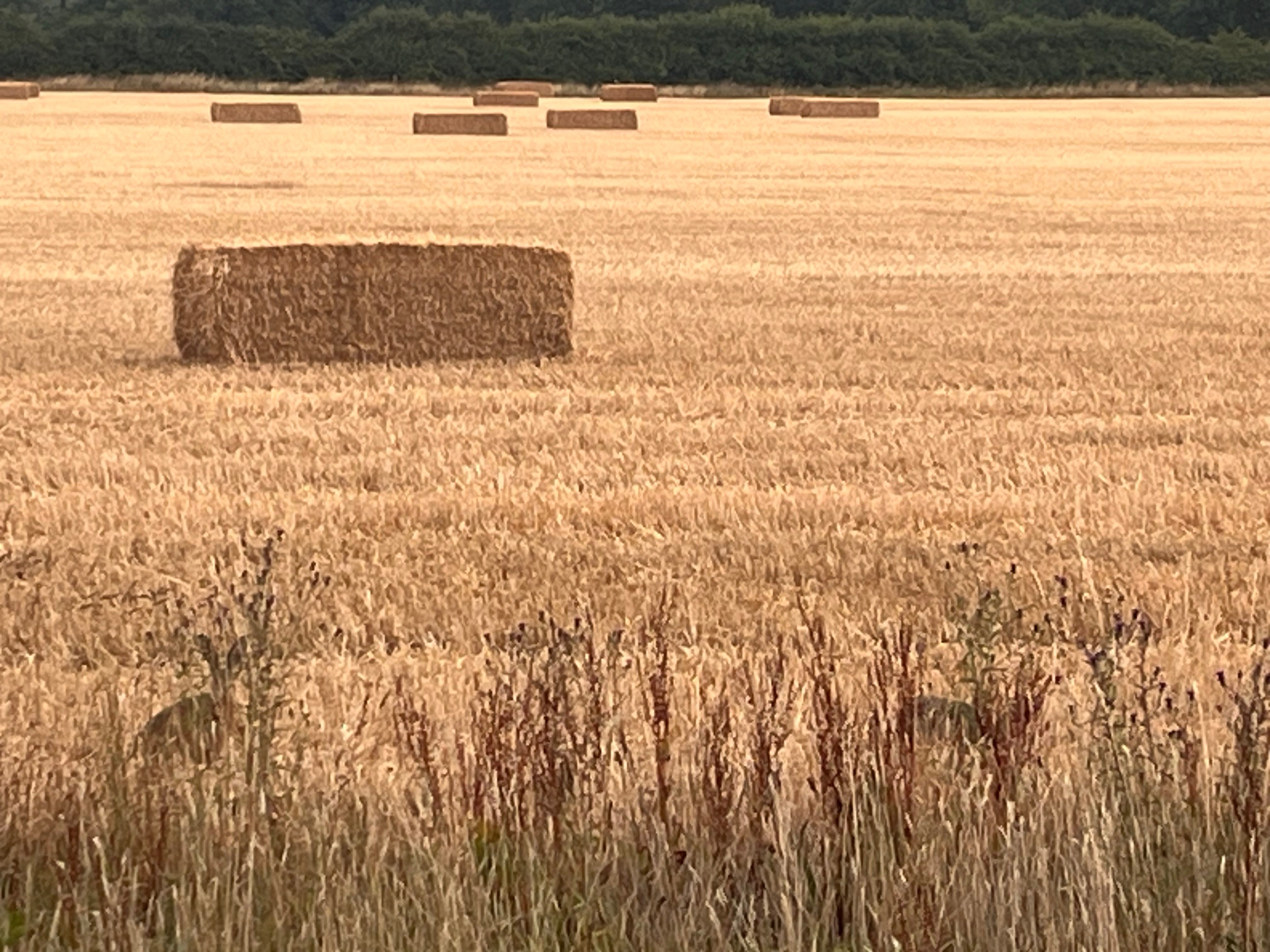
Most of the fields have been harvested. For the past couple of weeks the sound of harvesters and tractors has been constant. Yesterday and into the the evening the baler was at work, clanking away behind the tractor as it packed and bound each bale of barley straw. Many of the bales have already been collected, but in one of the fields off the lanes they lie like sarsen stones, strange Mesolithic monoliths dotted about the stubble. Ravens perch on them, hunched moodily. Brown hares (I count at least six) seem to be feeding in the field, perhaps from dropped grain. They move in pairs, or so it seems to me. I am on the other side of the hedge to them, and they are quite unaware of me. I’m wearing a large olive green sunhat, which helps break up my profile a little, and so I’m able to watch them through a small gap in the fence as they go about their business. A pair moves to the edge of the field, just metres from me, a little wary, but they’d run if they knew I was there. There has been a consistent population of hares living in these fields in the time I’ve been in the village. We often catch sight of them, usually singly, and very rarely in these numbers. I worry about their future. In a year or so construction vehicles will arrives to dig a wide trench through this field to accommodate the high voltage underground cables that will carry electricity from the wind farms to the huge substation under construction outside Norwich. From the substation the electricity will be carried to Essex along the corridor of controversial pylons. This is much needed infrastructure if we are to meet net-zero targets in the fight against climate disaster, but I feel conflicted over the local impacts. Hares run here and skylarks nest. The disruption will last a few years. After that the land will begin to heal, the cables out of sight. I just hope that the impact on wildlife will be as short lived.
On the track that leads past the old farmhouse, rabbits and squirrels scatter, seemingly surprised to see a walker up so early. The leaves in the hedges have taken on the hues of late summer. The soft light greens of spring hardening and darkening. Some are tinged brown from the long heat wave and drought. Two red kites circle over the track and then extend their glide across the open fields.
By the time I walk back past the farmhouse I can smell a breakfast being cooked. I haven’t had mine yet, and it will be welcome after the walk. The air is becoming more humid, and the wind is picking up. There might be more showers on the way so I pick up my pace. I meet a couple of dog walkers as I get closer to the village, and then pass their cars, parked illicitly in a field entrance, swallows racing over them in search of their morning feed of insects.
My family arrives safely in Buenos Aires after a diversion to Sao Paulo (to wait out heavy fog at Ezeiza airport). It is a relief, but they feel far away. Breakfast and lunch seem short without the usual chatter. There is no more rain, but the clouds keep building the promise of it. A wind builds. More apples fall from tree suffering in the drought. Many are ripe and have been savaged by birds and black ants. I collect the larger ones from the ground. Some of the apple flesh can be cut away, cooked or given to the hens. I select some good apples that look ripe or nearly ripe, and pick them from the tree. If I let them fall naturally they will pick up with bruising or ant damage.
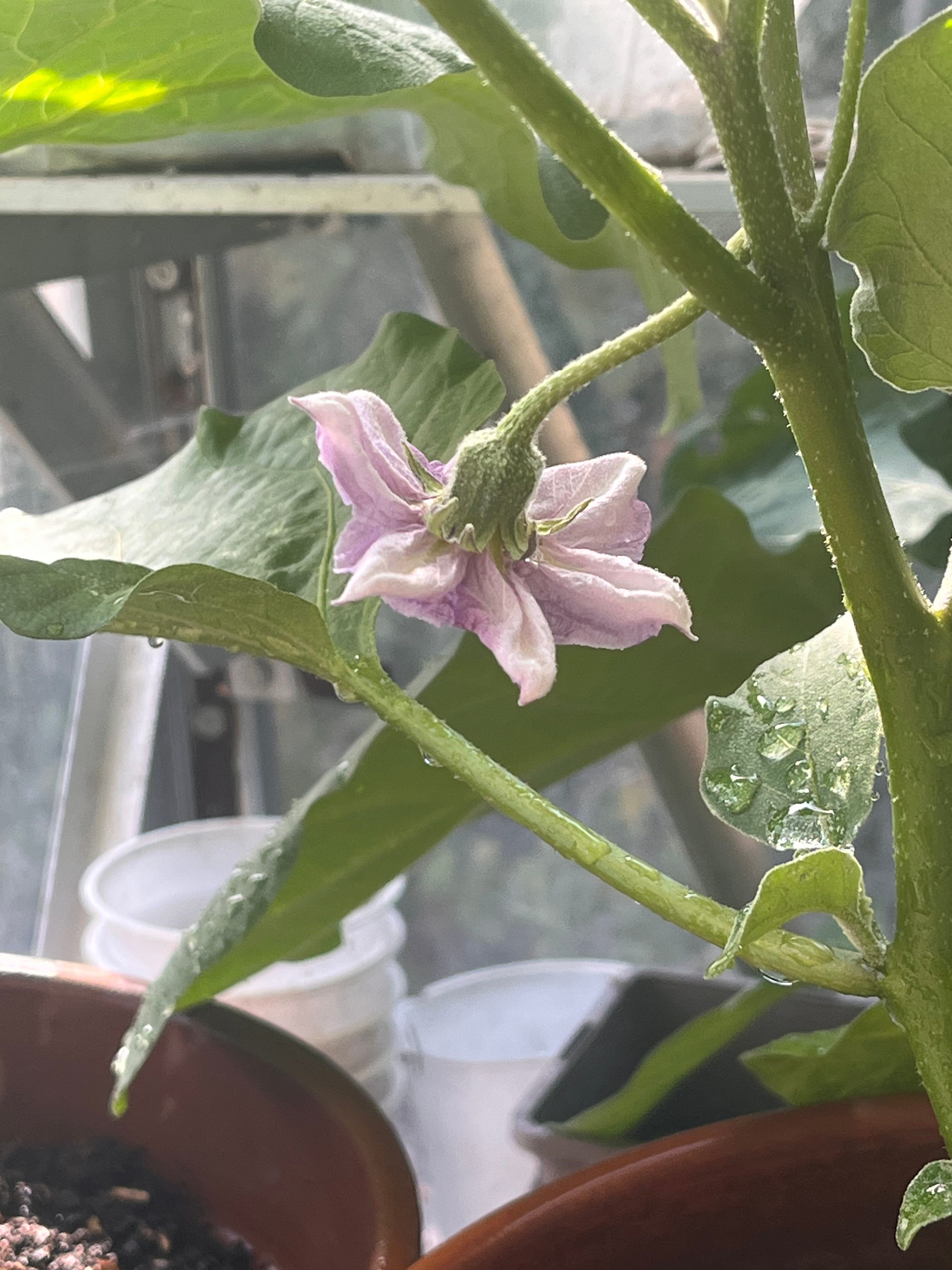
The garden needs less watering today. Even so, I do the rounds. The wind has dried the surface of the soil. In the greenhouse I find that one of the aubergine plants has finally flowered. We will hopefully have some aubergines from the two larger plants. Despite my best efforts with the watering can, the vegetable beds are clearly suffering from the lack of rain.
27/7
I start my walk almost an hour later than yesterday. I go back to the hare field. There is one on the field edge, by an old field entrance blocked with the stump of a dead oak. It must only be a few metres from me, but I’ve been clumsy with my footsteps and it startles, bounding into the field to a safe distance, where it raises itself, ears alert. An hour earlier and I suspect I would have seen more, but the dog walkers and runners are about, and the hares are probably invisible in the long grass of the field margins and the neighbouring meadow.
The verges and the margins are full of the purple heads of flowering knapweed, the white of the yarrow, and occasionally, the bright yellow of ragwort.
The red kites are circling in the same place as yesterday, thought there are three this time. They soar and fall over the field, enjoying the free lift of the wind over their wings.
The day started with clear blue skies, but by the time I’m walking back into the village they are crowding with fluffy cumulous. I want to fill the absence and stillness of the house with writing, but find myself paralysed, uncertain which of my long stalled writing projects to pick up and run with. I decide that I need to slow myself into the time I have, rather than rush at it with at the pace of my daytime job. Now that I have the time and space, I need to allow myself to use it for my own writing. I need to give myself permission, I think. It will come, but can’t be forced.
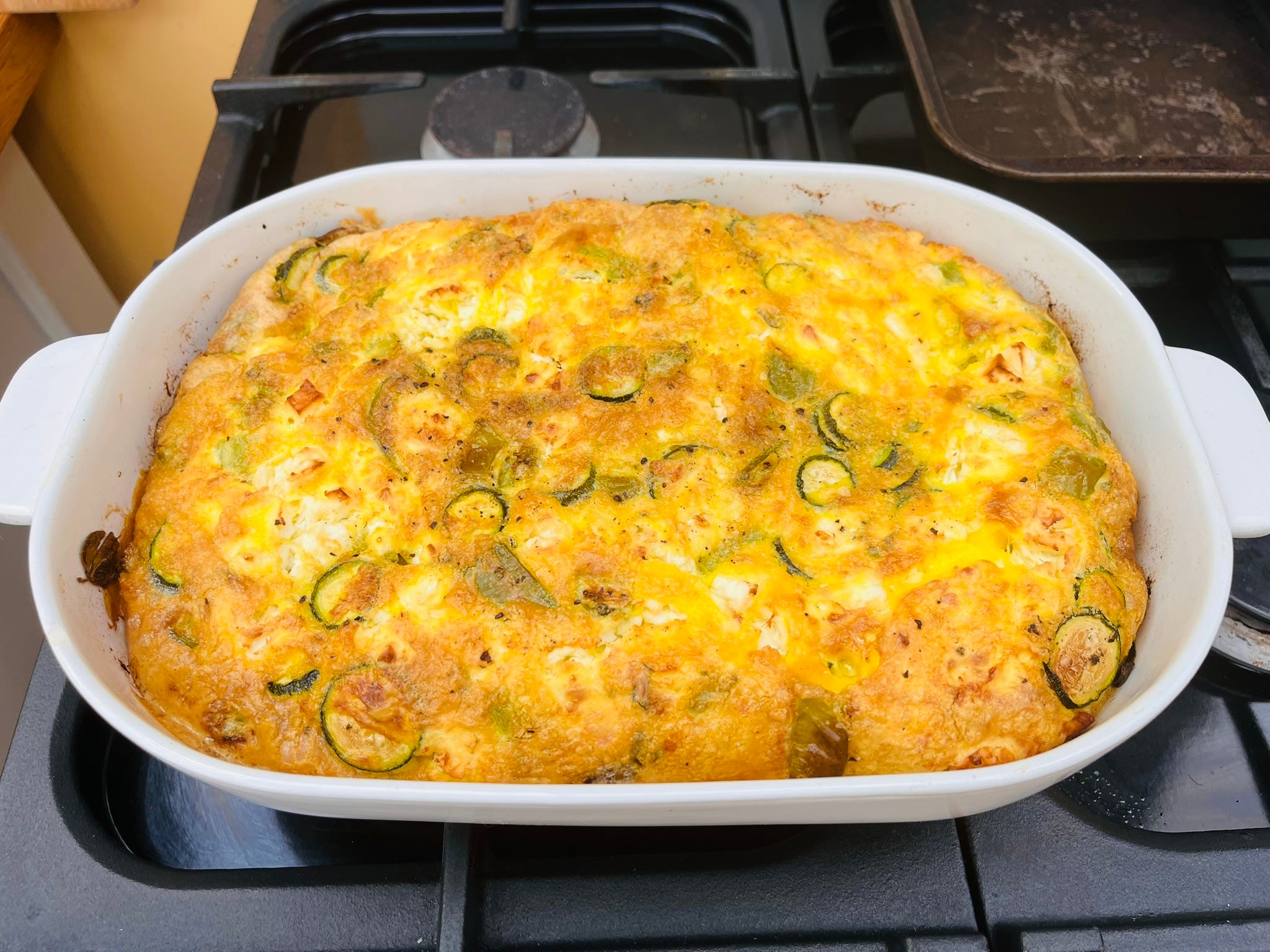
One of the challenges I face without my family in the house, is what to do with all the eggs. The hens are currently laying five eggs a day. That’s thirty-five eggs a week. I look up healthy egg recipes and use ten to batch cook a frittata, along with courgettes from the garden, for my lunches this week. I intend to pickle another ten. Still, I will need to be highly inventive to find ways of preserving or eating all the eggs that will be laid over the next few weeks. An image of Mister Greedy’s breakfast comes to mind with his three boiled eggs.
The wind slackens by lunchtime. The sky clouds over, then clears. The heat begins to build again. The wind that remains feels warm by the time I walk along the bridleway to ‘barking woods’. A green woodpecker rises with a cackle from the path ahead of me. The grass along the path is so dry it looks bleached.

28/7
I sleep badly and wake early to the squabbling and scuffling of sparrows on the gutters. I walk before breakfast before it gets too hot. A smell of manure hangs in the air. The farms must be beginning to re-fertilise recently harvested fields. When I reach the hare field, a hare emerges from a field entrance and sits on the tarmac. It watches me approach, then moves some distance down the lane, and stops, watches me again, then moves and so on, shifting a few metres at a time as I progress with my walk. I reach the field entrance. The field it emerged from is opposite hare field. I scan the barley stubble. About fifteen metres away I can see the V shape of what look like a hare’s ears. I can be certain. The V shape moves, seems to flatten out, dropping below the line of the stubble. A hare crouching? I pick my way across the stubble to see if I can get a closer look. The harvester has missed some of the barley, the sections under the hedge oaks, and I follow a wheel path through the uncut crop. There is nothing to be seen, and I begin to think I must have been mistaken. I turn to leave, and at that moment, the hare begins to run, a blur of brown, its feet drumming on the hard earth. I must have almost stood on it. It seemed to appear from nowhere, out of the stubble just two metres from me. Its stillness and the golden-brown camouflage of its fur has disguised it completely. Back in the lane, the other hare is still waiting. It lets me follow it at a distance, before it finds another field entrance, from where it watches me one last time. Then it too runs, a sudden explosion of speed, bounding across the stubble until it is in the middle of the field.


Along the track to the top fields it feels airless. The heat seems to radiate off the vast hard baked field even at this early hour. The sun feels strong. There are herringbone clouds to the east, but the rest of the sky is clear. Near the hollow three young rabbits chase each other in a field sewn with wildlife seed. They scamper in a figure of eight through the flowers before noticing my dreaded man-shape and running for their burrow. I realise for the first time in the years I’ve walked this track, how this section of hedge lacks hedge oaks. The hedge shows on aerial photos from 1946 and the boundary is on old OS maps, but I suspect the lack of mature trees must be because it is a relatively new hedge, no more than 150 years old, perhaps planted when they enclosed the common. The shade of trees would be welcome.
By the early evening the heat and humidity is unbearable. Each job in the garden—the watering of the vegetable beds, the collection of fallen fruit, the carrying of the sack of layer pellets to the feed bins, the watering of the fruit trees—feels heavy in the heat. The filling and the carrying of the watering can, the walking back and forth to the tap in the garage, all take more effort. I gather some blackberries and as I return I catch sight of a muntjac emerging from the dogwood at the end of the garden. It watches me, as if trying to work out what I’m doing there. It is probably making its way to the raised beds, where it has eaten most of the green growth of the remaining second earlies. I take a step towards the back door, and it makes a decision, moving behind the thick stems of the dogwood and out of sight. Next year we will fence the second earlies in with chicken wire.
Tomorrow will be hotter. These are summer days to be endured rather then enjoyed. There is nothing lovely or temperate about this heatwave.
29/7
I keep my morning walk short and early, trying to beat the heat. I set out before breakfast again, as soon as I’ve finished feeding the hens and the cats. The verges through the village are covered with barley straw and fragments of twine, from where the bales stacked high on trailers have struck the trees. There is probably enough to keep our hens bedding for the next two months, though I’m not about to start sweeping it up. The walk feels quiet, almost bereft of wildlife until I come across a roe deer. It is grazing on the margin of the field next to the path. It takes a moment to realise I’m there, and then squares itself towards me and takes a few cautious steps forward. I keep very still. Any sudden movement and it will startle. We stand like that for about half a minute, and then it barks, a short bark like that of a smallish dog, before turning, and with another bark, disappearing through the hedge.
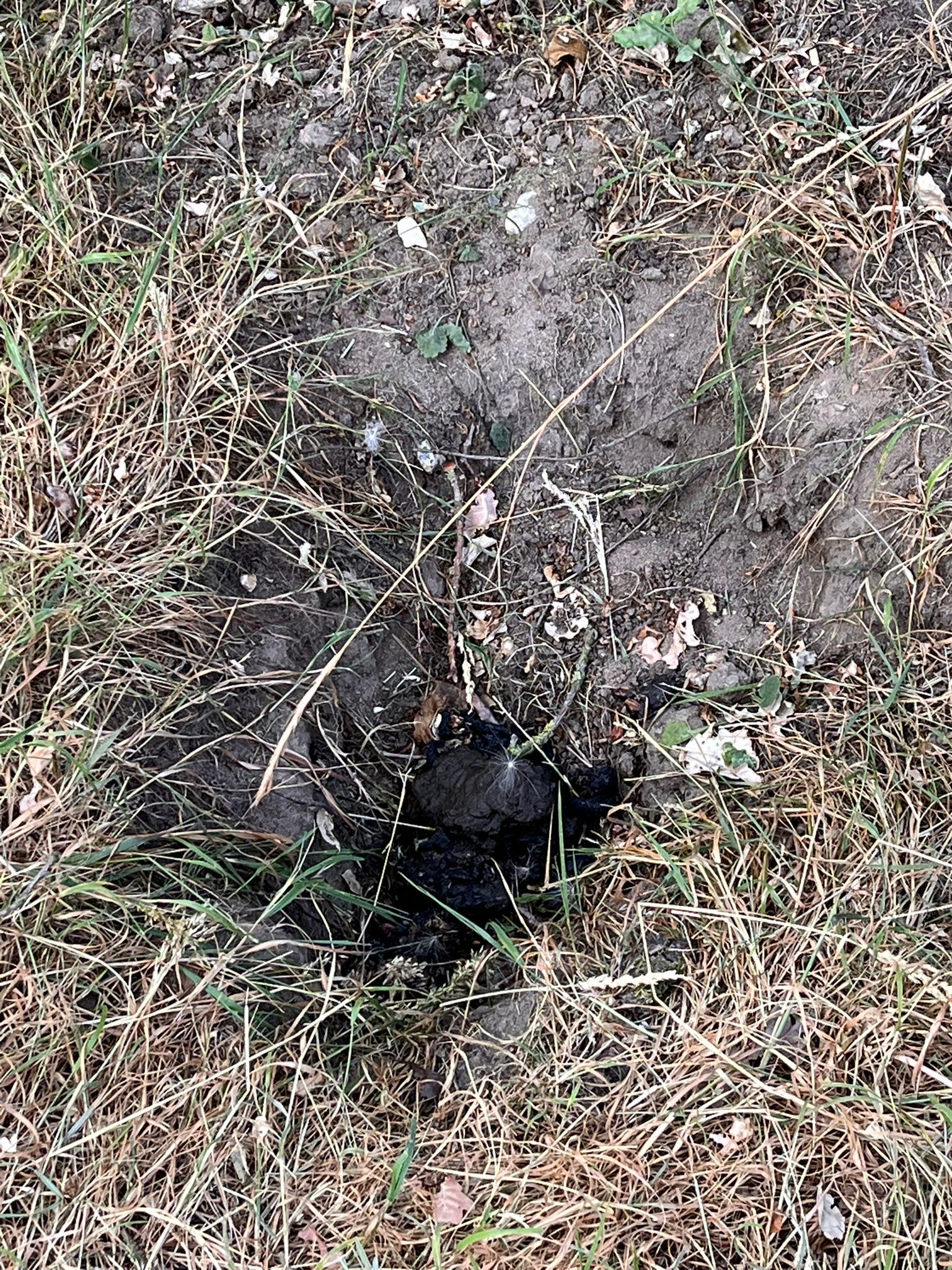
In the woods there is hardly any birdsong. Just some jackdaws calling out their names, and the cackling of a green woodpecker. I see blue tits and a wren, but it is so very quiet, as if the wood was bracing for the continued furnace of the day. I find a badger latrine, freshly used, by the edge of the path. There must be a sett close by.
When I get back I water the runner beans a little, and cut some of the pods as well as a large courgette. The tomato plants we have growing in a suntrap against a brick wall are beginning to produce lots of ripe fruit. If there is one small thing any of us can do to combat the despair of the ongoing climate disaster, then growing vegetables and fruit is a good one. There is a slow intimacy to it that is calming. To tend to a plant, water and nurture it, is to notice it, to be aware of what it needs. And when it gives back, its gift is food that has no air or road miles to it. To grow your own food is an act of climate resilience.
About ‘This Party’s Over’
On ‘This Party’s Over’ I publish my creative non-fiction, personal essays, place writing, and a country diary. My ‘Another Country Diary’ pieces are my most regular posts (about three or four a month).
The country diary can express a sort of local distinctiveness, explore a personal set of interactions with a landscape, and in doing so, almost accidentally, tease out the way the natural world is entwined with culture and politics. It can be a quietly radical and uncanny form, or sometimes just plain parochial, oddball in its specificity.
If you enjoyed this post, then follow the link below to the last one to read more, and, if you are feeling in the mood to, like, share, and subscribe for free. I love it when reader’s show their appreciation!
Upgrade to paid for full access to the archive and to the ‘Root and Branch Nature Writing’ series.
Another Country Diary #65

This Party's Over is a reader-supported publication. To receive new posts and support my work, consider becoming a free or paid subscriber.
You have really captured your last few days during this unpleasant heat, without the rest of your family around. Thanks for sharing...
This one is especially beautifully written. (Appreciate all of them, but this one especially so.) We have many hares in the fields here too, along with deer (I don’t know what kind) and wild boar, though where I am one sees the last more through the disturbances they leave in the crops than in motion themselves (in the fiends, that is; they are more visible in the forest), except after a harvest when their entire landscape changes in a day. I can’t imagine how they interpret or experience that.
On day on a walk I noticed a hare hanging out in an empty horse pasture amid a crowd of rooks. The birds would certainly have flown away had a human approached, but apparently the large hare was no disturbance.
Enjoyed the bit of reverse Shakespeare, though the sense of it is sad.