
Another Country Diary #59
With the return of swallows.

26/4
Ceci and I walk the windy lanes, a long circular walk that takes in ‘the top’ and the lower fields, before returning via barking woods and the bridleway that follows the long hedge into the village. The sun is out and it’s mild enough for shirt sleeves, especially along the the sunny wind-sheltered field margins. We stop to talk to the owner of the old farmhouse that we pass on our walks. He moved in recently. We tell him about the way the skylarks have thrived over the past few years, when the estate has sown some of its set aside fields along the top with a bird seed mix. I hope it continues, but I guess it will only do so if the incentives for such initiatives exist.
The butterflies are out. Orange-tips visiting the delicate white flowers of the garlic mustard growing along the verges, a brimstone along the field margins, a red admiral by the long hedgerow.
The ground is incredible dry for the time of year. The field ponds are already just mud at the bottom. All the winter puddles are dry and dusty.
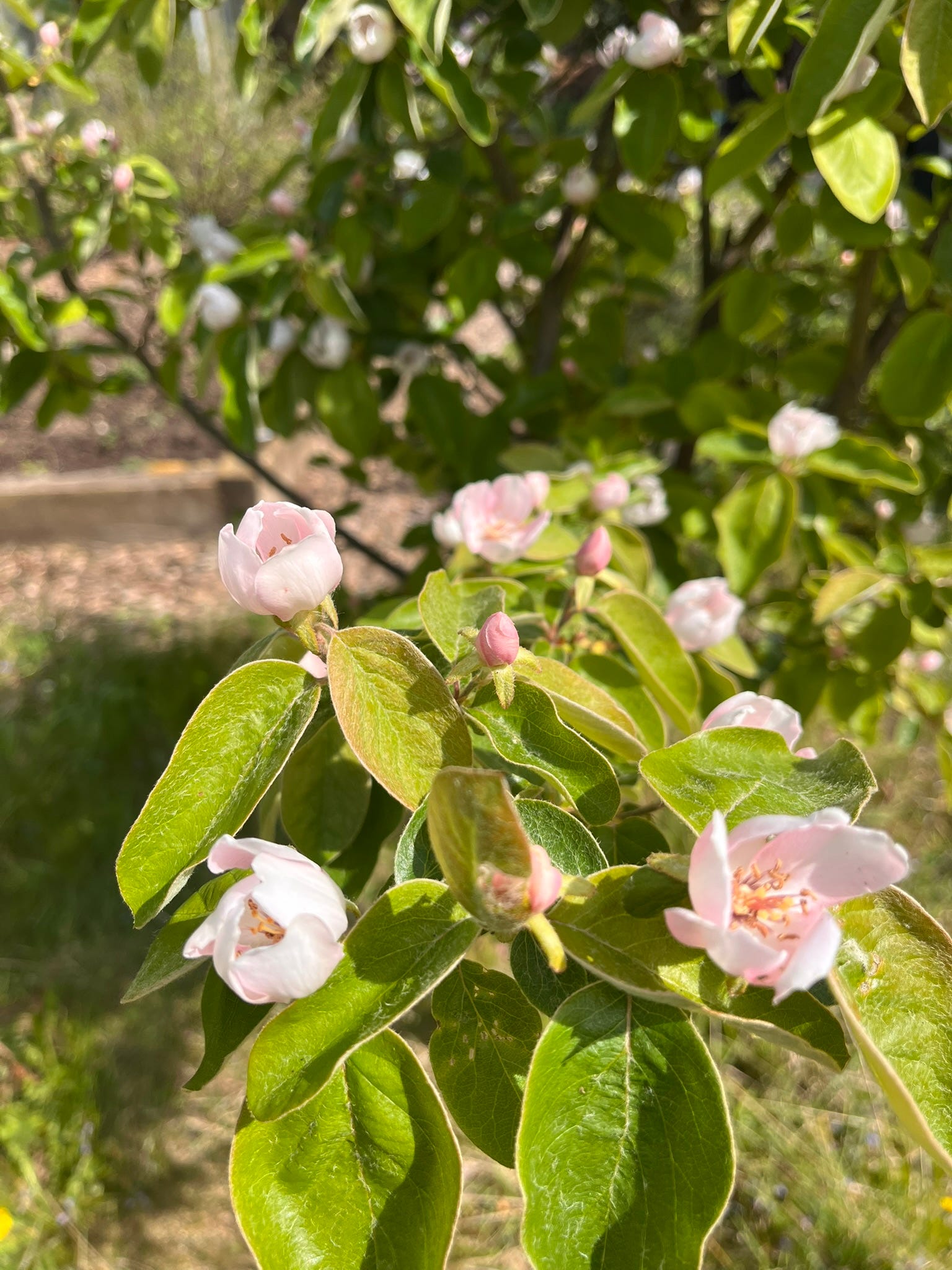
In the garden the quince tree is flowering. It is the third year it has flowered, and we are hoping that it is now strong enough to hold fruit, though it might still take another couple of years.
28/4
The swallows have returned! They are swooping and diving above the hedgerow as we take a post-work walk past the huge rapeseed fields to barking woods. They are picking off the small insects that seem to cluster this hedgerow, which has a deep wet ditch running alongside it. They are almost at head height, close enough to touch.
In the wood, the yellow archangel has peaked, the petals starting to fall back. Forget-me-nots are pushing up high, competing with long grass and nettles. A song thrush, persistent in its vocalisations, can be heard on the other side of the wood. Above us and around us, great tits, robins, and chiff-chaffs.
The rapeseed flowers are beginning to turn to seed, little green pods replacing the yellow. Soon the great blocks of sunshine will be a memory, and the seed pods will swell and dry ahead of harvest. For a moment a swallow hangs above us in the wind, and sings. I don’t think I have ever heard a swallow sing. It is on its own. Perhaps it has lost contact with the mob that were here earlier. But is seems to hover and sing in the evening light, before it disappears into the next field with a quick, decisive sweeping back of its wings.
29/4
Something is eating the runner beans. I find that one plant has disappeared, that another has been nibbled, that a third has been nearly tugged out from the ground. I suspect the muntjac that is a frequent visitor to the garden. It seems larger than the others, paler in colour. It usually prunes back the dogwood for us, which we don’t mind, or eats the tulips and roses, which we do mind. We’ve had rabbits in the past attack the garden. They used to hop out of the copse from the field beyond, but we’ve had none now for years. I think between Benji and our neighbour’s cat, there is enough of a deterrent for them to stay well clear of the garden. I dig out the chicken wire fencing we used to use to keep the rabbits off and run it around the beans to create a bit of a defence, hopefully enough to protect the rest of the plants as they establish.
30/4
Two F-35 fighter jets roar through the skies as I hang up the washing. They glint, pale and angular, in the cloudless blue. For a moment one seems to hang, they fall back on itself, manoeuvring to get behind the other. I can’t tell if they are practicing dog fighting or just throwing the planes around for the sheer freedom of it. They have fallen in altitude, and both of them come out of a dive and into a slow bank that takes them away and out of sight, taking their thunder with them.
After dusk our two cats suddenly rush to the glass doors of the kitchen. A flash of dark movement in the sky. Bats, the first I’ve seen this year, breakfasting on the moths and midges above our garden.
1/5
May and the full rush of spring. Summer feels close. Even by late morning it s warm enough to sit outside with a coffee. Today is my day off, and of once I make sure it stays that way, avoiding the temptation of sneaking a look at my email. I catch sight of a swallow flying with a flurry of wingbeats towards the fields. Something with a vast wingspan rises from the garden, disturbed as I get up from the garden chair. I catch a brief glimpse of a pair of pale wings beating as it flies through the copse. Most likely a heron visiting our pond, though it will find it empty, having cleaned it out of the remaining fish last summer.
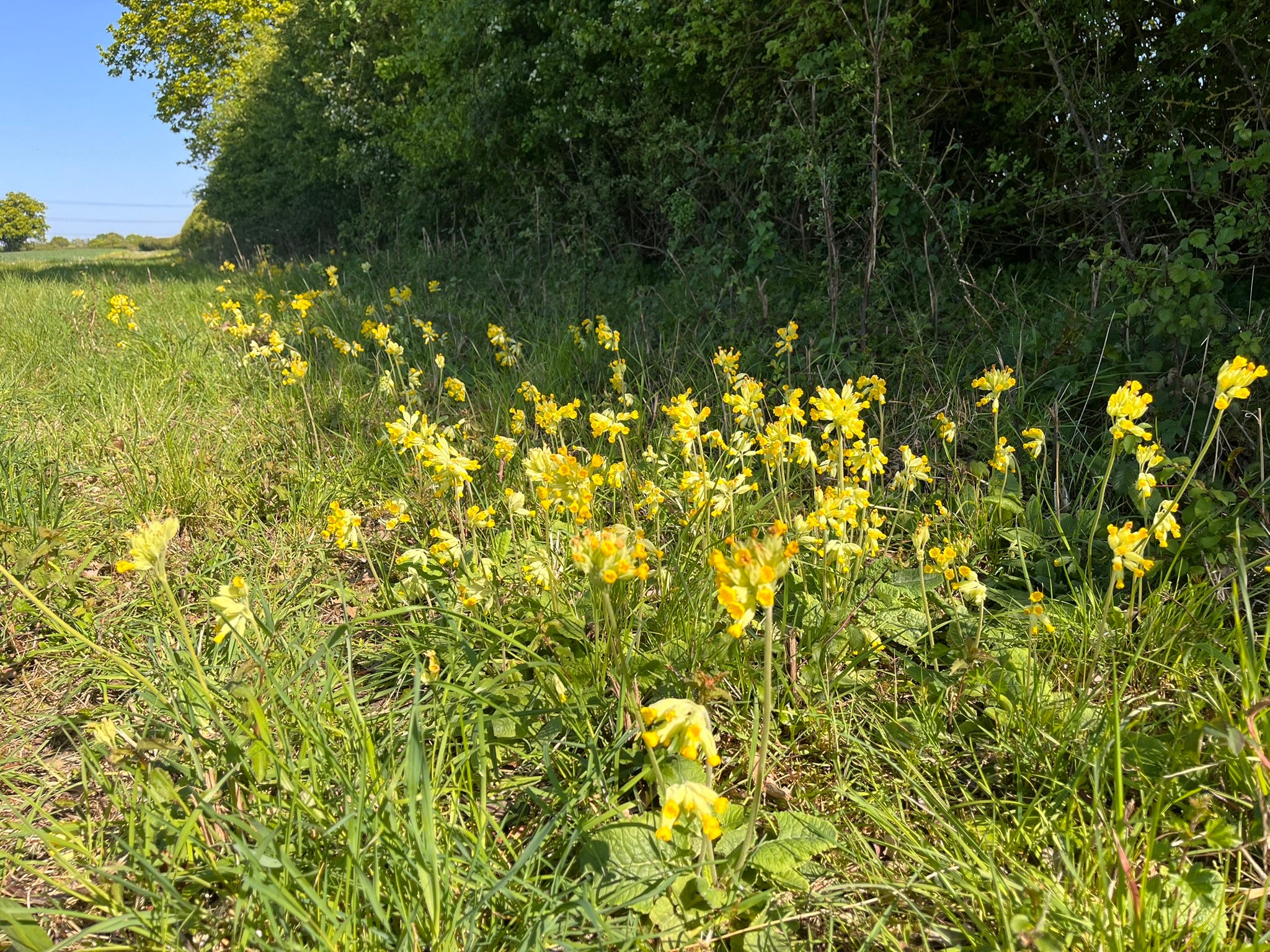
In the late afternoon we walk up to the top and back. At this time I would usually be picking my daughter up from school, but she has gone to a friend’s to hang out after a week of exams. The cow parsley is growing high now along the verges and field margins. The cowslips are at their peak. Greenfinches race about the hedgerows. Skylarks hang for the long duration of their songs. The sky is an empty pale blue bowl. We spot a couple of roe deer in the distance, moving along and then disappearing into a treeline. The rabbit kits are out by the burrow on the edge of the village. Not many of them will make it—that field is frequented by a fox and a neighbour’s cat—but for now they are small brown bundles of fur warming in the sun.
I keep finding caterpillars on my clothing. They seem to be descending from the trees. The leaves of the large cherry tree next to our hen enclosure are covered in holes. The hens are being kept busy pecking at both the caterpillars and the hard green cherries that have started to fall, knocked down by birds and wind.
2/5
I water the vegetable beds and the fruit trees in the morning. I spot a red admiral landing on the leaves of a potato plant for a drink. The deer have been nibbling the strawberry plants.
At night it rains. Heavy downpours across the windows.
About ‘This Party’s Over’
On ‘This Party’s Over’ I publish my creative non-fiction, personal essays, place writing, and a country diary. My ‘Another Country Diary’ pieces are my most regular posts (about three or four a month).
The country diary can express a sort of local distinctiveness, explore a personal set of interactions with a landscape, and in doing so, almost accidentally, tease out the way the natural world is entwined with culture and politics. It can be a quietly radical and uncanny form, or sometimes just plain parochial, oddball in its specificity.
If you enjoyed this post, then follow the link below to the last one to read more, and, if you are feeling in the mood to, like, share, and subscribe for free.
Upgrade to paid for full access to the archive and to the ‘Root and Branch Nature Writing’ series.
I love how dedicated your observations of the natural world are, how sustained your focus is. I want to write like that, to keep my eye on the real observations and have them speak for themselves.